Heating & AC FAQs | Provo, UT
HVAC Frequently Asked Questions – Provo Heating and Air Pros
We are your local Provo Heating and Air Pros, and after years of working in homes throughout Utah County, we have heard just about every question a homeowner can have about their heating and cooling systems. The questions on this page are the real ones, the same questions that Provo families ask us on service calls, in follow-up conversations, and when they are trying to decide whether to repair or replace, whether to call right now or wait until Monday, and whether what their system is doing is a minor nuisance or a genuine warning sign.
Provo’s climate puts real demands on HVAC equipment in both directions. Summers in Utah County push temperatures past 95 degrees for extended stretches from June through August, and winters drop to average January lows around 23 degrees Fahrenheit, with cold fronts that take temperatures into the single digits on some nights. Living here means running your air conditioner hard through summer and your furnace consistently from October through April. Equipment that is not maintained, not sized correctly, or not repaired properly when problems develop fails faster and costs more to operate than it should.
We have served Provo and the surrounding communities of Orem, Springville, Mapleton, Lindon, and Pleasant Grove long enough to understand the specific equipment, housing types, and seasonal conditions that make HVAC decisions in this area different from the generic advice you find in national publications. The answers on this page reflect what we actually see in Provo homes, not what is theoretically true in some average American climate.
Read through the sections that apply to your situation. If you have a question that is not answered here, or if your system is showing any of the symptoms described below, reach out to us for assistance and we will help you figure out the right next step.
General Heating and Air Conditioning Questions in Provo
How often should I have my HVAC system serviced in Provo?
The baseline is once a year for each major system. In Provo’s climate, that means furnace or boiler service before the heating season begins, typically in September or October, and AC service before the cooling season, typically in April or May. Both heating and cooling systems in Provo see heavy seasonal use, and annual service catches developing issues before they become mid-season failures. A system that is serviced regularly also operates at the efficiency it was designed for rather than gradually degrading as components wear and accumulate buildup.
How do I know if my HVAC system is the right size for my Provo home?
Signs of an undersized heating system include rooms that never reach the thermostat setting during Provo’s coldest weeks, continuous furnace operation without achieving setpoint, and high energy bills relative to the comfort you are getting. Signs of an oversized system include frequent short cycling, temperature swings, and in cooling mode, humidity that feels excessive because the system is not running long enough to dehumidify adequately. If your system has never quite worked right since it was installed, improper sizing is worth evaluating. We assess system sizing as part of any comprehensive evaluation or replacement discussion.
What is the lifespan of a typical HVAC system in Provo?
Gas furnaces typically last fifteen to twenty-five years in Provo homes with proper maintenance. Central air conditioning systems typically last twelve to eighteen years. Boilers, particularly cast iron models, can last thirty years or more with appropriate service. Ductless mini split systems typically last fifteen to twenty years. Provo’s demanding seasons, which require heavy use from both heating and cooling systems, put more annual wear on equipment than milder climates. Annual maintenance significantly extends realistic service life by addressing wear before it accelerates.
Should I repair or replace my HVAC system in Provo?
Age, repair history, and the nature of the current problem are the three factors we look at. A system under twelve years old with its first significant failure is almost always a repair candidate. A system that is sixteen or more years old, has had repeated repairs over the past two seasons, and is now presenting with a major component failure is approaching the decision point where replacement produces better long-term value. A compressor failure on a fifteen-year-old AC system, or a heat exchanger failure on an older furnace, are the situations where we most commonly have the honest repair-versus-replace conversation. We give you the assessment based on your specific equipment.
What should I do to prepare my HVAC system for Provo winters?
Schedule furnace or boiler service before the heating season starts, ideally in September before the first cold nights arrive. Replace the air filter before startup and set a reminder to check it monthly through the heating season. Clear the area around the furnace of any stored items that could restrict combustion air. Test your thermostat by switching to heat mode and confirming the system responds. If you have a ductless heat pump, clean the indoor head filters and verify the outdoor unit is not obstructed by vegetation or debris.
Air Conditioning Repair and Installation FAQs in Provo
Why is my AC running but not cooling my Provo home?
Several issues can cause this. Low refrigerant charge from a leak is the most common cause of gradual cooling capacity loss. A dirty condenser coil clogged with cottonwood or debris reduces the system’s ability to reject heat during a Provo July. A failing compressor may run but not pump refrigerant effectively. A completely clogged air filter can restrict airflow enough to freeze the evaporator coil, after which the system circulates air around the ice rather than cooling it. Each of these requires a proper diagnostic to confirm. Contact us today and we will identify the actual cause rather than working through possibilities speculatively.
Why does my AC freeze up in Provo?
Ice on the refrigerant lines or evaporator coil forms when refrigerant temperature drops below freezing due to either low refrigerant charge or severely restricted airflow. Turn the system off and switch the fan to ON to let the ice thaw. While it is thawing, check your air filter. If the filter is completely clogged, replace it and try the system again. If the icing returns after the filter is clean, low refrigerant charge from a leak is the likely cause and requires professional service. Running the system while iced over risks compressor damage from liquid refrigerant entering the compressor.
How do I know if my AC has a refrigerant leak?
Gradual decline in cooling capacity over several weeks or a season, ice forming on the refrigerant lines or indoor coil, a hissing sound near the line set connections or indoor coil, and an oily film near the refrigerant fittings are all signs of a refrigerant leak. A refrigerant leak should be found and repaired before the system is recharged. Adding refrigerant to a leaking system only delays the next service call. We locate and repair the leak, then recharge the system to the correct specification.
Is it worth replacing a 12-year-old AC unit in Provo?
It depends on the nature of the problem. A twelve-year-old system with a minor repair need, a capacitor, contactor, or condensate drain issue, is generally worth repairing. A twelve-year-old system with a compressor failure or a significant refrigerant-side failure is approaching the decision point. We consider the repair cost relative to the system’s remaining realistic service life and give you our honest assessment. A compressor replacement on a system that is also approaching the end of its expected life is a more difficult case to make than the same repair on a system with many years of life remaining.
What size AC system does my Provo home need?
Proper sizing requires a load calculation that accounts for your home’s actual heat gain characteristics: square footage, ceiling height, insulation, window area and orientation, sun exposure, and Provo’s specific climate data. A rule of thumb based on square footage alone frequently produces incorrect sizing. An oversized system short-cycles and leaves the home feeling humid even at the correct temperature. An undersized system runs continuously during Provo’s hottest weeks without reaching setpoint. We perform the calculation correctly on every installation.
Can you install central AC in a Provo home that currently uses a swamp cooler?
Yes. Swamp cooler-to-central-AC conversions are work we handle in Provo. If the home has an existing forced-air furnace and ductwork, we evaluate whether that duct system is suitable for the AC installation. If the home lacks ductwork, a ductless mini split system is often the most practical path to efficient refrigerant-based cooling without the cost and disruption of installing new ductwork throughout the home. We assess both options and give you an honest comparison for your specific property.
Furnace and Heating Repair and Installation FAQs in Provo
Why does my furnace keep shutting off before my Provo home reaches temperature?
Short-cycling in a furnace is caused by a high-limit safety switch tripping, which can result from a dirty air filter restricting airflow and causing the heat exchanger to overheat, a failing flame sensor that loses the combustion signal prematurely, a cracked heat exchanger triggering a safety shutdown, or a pressure switch fault on a condensing furnace. The symptom points in several directions and requires a proper diagnostic to determine which cause applies. Continuing to run a short-cycling furnace without addressing the cause risks accelerating heat exchanger damage if overheating is involved.
What should I do if my furnace stops working during a Provo winter?
Start with the basics. Check the thermostat, confirm it is in heat mode, the temperature setting is above the current room temperature, and the batteries are not dead. Check the circuit breaker for the furnace. Check the air filter. Confirm the gas supply valve near the furnace is in the open position. If all of those check out and the furnace is not responding, contact us today. If you smell gas at any point during this process, stop and leave the home. If you smell gas or suspect a gas leak, go outside immediately and call 911 – this is a serious emergency that needs urgent attention from the gas company.
How long does a furnace last in a Provo home?
A well-maintained gas furnace typically lasts between fifteen and twenty-five years. Provo’s heating season is long enough that these systems accumulate more annual operating hours than they would in a milder climate. Annual maintenance, prompt repair of developing issues, and consistent filter management extend realistic service life significantly. A furnace that has been ignored until it fails and then patched without addressing the underlying cause of each failure will not reach the high end of that range.
Is a high-efficiency furnace worth it in Provo?
Given Provo’s heating season, which runs meaningfully from October through April, the energy savings from a 95 or 96 AFUE condensing furnace compared to an 80 AFUE standard furnace are real and accumulate over the system’s life. The additional installation cost for a condensing furnace, including PVC venting and condensate drain requirements, is typically offset by operating savings within several years in a Provo home that runs the heat heavily. For homeowners who plan to stay in the property for many years, the investment in higher efficiency makes clear financial sense in this climate.
What is delayed ignition and why does it matter in my Provo furnace?
Delayed ignition is the condition that produces a banging or booming sound when your furnace first lights. It means gas is accumulating in the combustion chamber before the igniter successfully lights it, and when it does ignite, the pressure wave from all that gas lighting at once produces the bang. Causes include dirty burners, low gas manifold pressure, a degrading igniter, or a failing gas valve. Repeated delayed ignitions accelerate heat exchanger stress and are associated with earlier heat exchanger failure. Contact us today if you are hearing this sound at startup.
Boiler Repair and Installation FAQs in Provo
Why does my boiler keep losing pressure?
A boiler that requires regular refilling to maintain pressure has one of three problems: a leak somewhere in the distribution piping or at a component, a waterlogged expansion tank that is causing the pressure relief valve to discharge during each heating cycle, or a faulty automatic fill valve that is not maintaining pressure correctly. Each requires a different repair. We diagnose which cause applies in your Provo home before recommending any work. Refilling the system repeatedly without addressing the underlying cause means you are adding oxygen-laden water to the system each time, which accelerates internal corrosion over time.
Can I add radiant floor heat to my existing boiler system in Provo?
In many cases yes, though whether your existing boiler has sufficient capacity for the additional load and whether it can operate at the lower supply temperatures that radiant floor systems require are both questions that need to be evaluated. Traditional baseboard radiation systems operate at high supply temperatures, and boilers sized for high-temperature distribution may not be the best match for a radiant floor addition that operates more efficiently at lower temperatures. We assess the existing system’s compatibility and give you an honest picture of what a radiant floor addition would require.
What is the banging sound in my boiler, and is it serious?
A banging or kettling sound from the boiler vessel is typically caused by scale deposits on the heat exchanger creating localized hot spots where the water briefly flashes to steam before the bubble collapses. It is a sign of heat exchanger scale buildup that reduces heat transfer efficiency and accelerates heat exchanger wear if not addressed. A system flush and descaling treatment are typically the appropriate response for early-stage kettling. Provo’s water quality affects how quickly scale accumulates in boiler systems, and annual service helps catch this issue before it becomes a significant problem.
How do I know if my boiler expansion tank needs to be replaced?
A waterlogged expansion tank, one that has lost its air charge and is full of water, typically presents as a pressure relief valve that is discharging periodically, system pressure that climbs unusually high during a heating cycle, or a relief valve that has begun dripping between cycles. If you tap a properly functioning expansion tank, the top portion should sound hollow because it contains air. If it sounds solid throughout, the tank is likely waterlogged. Reach out to us for assistance and we will diagnose and repair the expansion tank system correctly.
Ductless AC and Mini-Split Repair and Installation FAQs in Provo
Are ductless mini splits a good option for Provo homes?
Yes, particularly for homes without existing ductwork, for room additions, for converted spaces like finished basements or garages, and for rooms that have never been comfortable with the central system. Modern cold-climate inverter mini splits are rated for heating operation down to negative thirteen degrees Fahrenheit, which covers all but the most extreme Provo conditions. They are highly efficient in heating mode at moderate temperatures and in cooling mode year-round. For homes where installing central ductwork would be invasive or cost-prohibitive, ductless systems are often the most practical path to whole-room climate control.
Why is my ductless mini split displaying a fault code?
Fault codes are the system’s self-monitoring output and each code points to a category of detected issue. Common codes relate to refrigerant pressure faults, communication errors between the indoor head and outdoor unit, temperature sensor readings outside expected ranges, and drain system overflow. We use manufacturer-specific diagnostic equipment to read the full fault history and test the components the code implicates before drawing any conclusions about the repair. Contact us today if your mini split is displaying a code and we will schedule a diagnostic visit.
How long does a ductless mini split installation take in Provo?
A single-zone ductless installation in a typical Provo home, with accessible wall locations, a reasonable line set run length, and an existing appropriate electrical circuit nearby, typically takes three to five hours. Multi-zone installations with multiple indoor heads, longer line set runs, or locations requiring more complex routing take longer. We give you a realistic time estimate after assessing the specific installation location in your home.
Can a ductless system cool multiple rooms in a Provo home?
Yes. Multi-zone ductless systems support two to six or more indoor heads connected to a single outdoor unit, with each indoor head controlling its own zone independently. Each head can be set to a different temperature, and the outdoor unit modulates its output to meet the combined demand from all active zones. This makes multi-zone ductless systems an effective whole-home solution for Provo homes that lack central ductwork or where individual room control is a priority.
Emergency HVAC Repair FAQs in Provo
What counts as a true HVAC emergency in Provo?
A true HVAC emergency is a situation where health, safety, or significant property damage risk is present. Complete furnace failure in below-freezing conditions, complete cooling failure during extreme heat with vulnerable individuals in the home, carbon monoxide detector activation near HVAC equipment, gas odors associated with heating systems, electrical burning smells from HVAC components, and active water flooding from failed condensate systems all qualify. Comfort-related failures without safety implications are urgent and deserve prompt service but may be handled as priority same-day calls rather than emergency dispatches depending on conditions.
What should I do if my furnace fails on a cold Provo night?
Check the basics first: thermostat settings, circuit breaker, air filter, gas supply valve. If those do not restore function, call us. While waiting, keep interior doors closed to retain heat in occupied rooms, use space heaters with appropriate safety precautions, and add extra blankets. If you smell gas during any part of this process, leave the home immediately. If you smell gas or suspect a gas leak, go outside immediately and call 911 – this is a serious emergency that needs urgent attention from the gas company. For all other furnace failures, contact us today and we will assess urgency and dispatch accordingly.
Can I search for emergency HVAC repair near me and reach Provo Heating and Air Pros?
Yes. If you are in Provo or the surrounding Utah County communities, we are your local emergency HVAC team. Contact us today and we will give you an honest arrival window based on current conditions and call volume.
Do you handle emergency HVAC calls on weekends and holidays in Provo?
Yes. HVAC emergencies do not wait for business hours, and we are available for after-hours and weekend emergency calls in Provo and throughout Utah County. After-hours calls involve different service rates than standard weekday calls, which we communicate clearly when you contact us before dispatching.
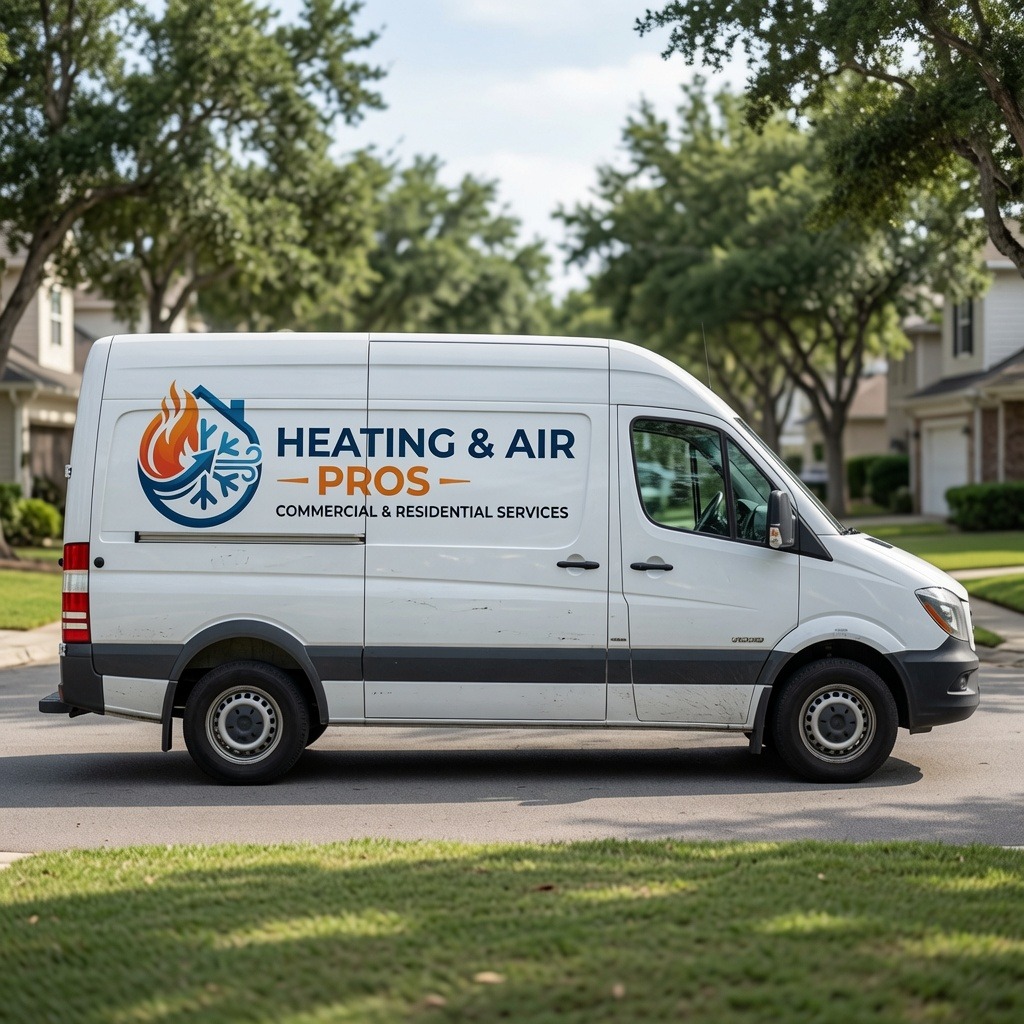
Service Area and Scheduling Questions for Provo
What cities and areas do you serve around Provo?
We serve Provo and the surrounding Utah County communities including Orem, Springville, Mapleton, Lindon, and Pleasant Grove. Our technicians are based in and familiar with this area and serve all of these communities regularly. If you are in a community not listed here, contact us today and we will confirm whether your address falls within our service area.
How far in advance should I schedule HVAC service in Provo?
For routine maintenance, scheduling two to four weeks ahead of the season you are preparing for gives you good availability and avoids the rush that typically hits when the first cold nights arrive in fall or the first heat wave hits in June. For repairs on systems that are functioning but developing issues, calling within a few days of noticing the problem is appropriate. For emergencies, we take calls as they come and prioritize based on urgency and home conditions.
What HVAC brands do you service in Provo?
We work on all major residential HVAC brands including Carrier, Trane, Lennox, Rheem, Goodman, American Standard, Bryant, York, Amana, Mitsubishi, Daikin, LG, Fujitsu, and others. We have the brand-specific diagnostic familiarity that matters on communicating and variable-speed systems from the major manufacturers, which are increasingly common in Provo’s newer and upgraded homes.
What should I tell you when I call for HVAC service in Provo?
The more detail you can share, the better prepared we are when we arrive. Tell us the system type, approximate age if you know it, what the system is doing or not doing, when the problem started, and any recent changes like a new thermostat or a recent filter change. For emergency calls, tell us about any vulnerable individuals in the home and current indoor and outdoor temperatures so we can prioritize correctly.
Why Provo Homeowners Keep Coming Back to Provo Heating and Air Pros
We are the trusted local experts in Provo for heating and cooling, and that description reflects what we have built over years of actual work in Utah County homes. We have worked in Provo’s established older neighborhoods where homes carry decades of modifications and varied equipment. We have worked in the newer developments expanding through Utah County where modern high-efficiency systems with communicating controls require a different set of technical skills. We have responded to furnace emergencies on January nights with temperatures in the single digits and AC calls during July heat waves when the valley stays hot through the night.
The reason Provo homeowners come back to us is not complicated. We diagnose accurately. We explain what we find in plain terms. We repair with quality components and correct technique. We show up when we say we will. And we treat every Provo home we enter with the same respect we would want shown in our own homes.
Your local HVAC pros you can count on in Provo are the same team every time you call. We know the housing, the climate, the equipment, and the community. We have built our reputation in Provo one completed job at a time, and we intend to keep it that way.
Contact us today with any heating or cooling question, service need, or emergency. Provo Heating and Air Pros is ready to help.
Zip codes we serve: 84601, 84602, 84603, 84604, 84605, 84606, 84057, 84058, 84059, 84097, 84660, 84663, 84664, 84042, 84062
Heating & Air Conditioning Services
Complete Home Comfort Solutions for Your Property
From heating system repairs to air conditioning maintenance and installations, our team has the tools and expertise to keep your home or business comfortable year-round. We deliver reliable, high-quality HVAC service you can count on.
We Deliver Expert Results
Don’t settle for temporary fixes. We combine years of hands-on experience with modern technology to deliver long-lasting heating and cooling solutions. Our team values your time, your comfort, and your property.
- Heating System Repair & Maintenance
- Furnace Repair & Installation
- Air Conditioning Services
- AC Repair & Tune-Ups
- HVAC Diagnostics & System Checks
- Indoor Comfort Solutions